Track Your Impact
Create a MyPromise account for access
to your personalized digital dashboard.
Create a MyPromise account for access
to your personalized digital dashboard.
In September of 2000, 189 UN member states came together under the leadership of UN Secretary-General Kofi Annan to commit their nations to a new global partnership for reducing extreme poverty worldwide by 2015.
The result of this meeting was the adoption of the eight Millennium Development Goals (MDGs), a set of quantified objectives for addressing extreme poverty and its many root causes. The MDGs target income poverty, hunger, disease, and exclusion, while promoting gender equality, education, and environmental sustainability.
We will have time to reach the Millennium Development Goals—worldwide and in most, or even all, individual countries—but only if we break with business as usual.
In 2002, world leaders signed the Monterrey Consensus, committing to support achievement of the Goals by contributing 0.7% of GNP (gross national product) to official development assistance. G8 leaders again pledged their commitment in 2005 at the Gleneagles Summit, agreeing to double aid to Africa by 2010 en route to larger increases by 2015.
Five years after the Goals were established, an inspired group of people began to see it was time for a movement to help mobilize the global community to fulfill these promises.
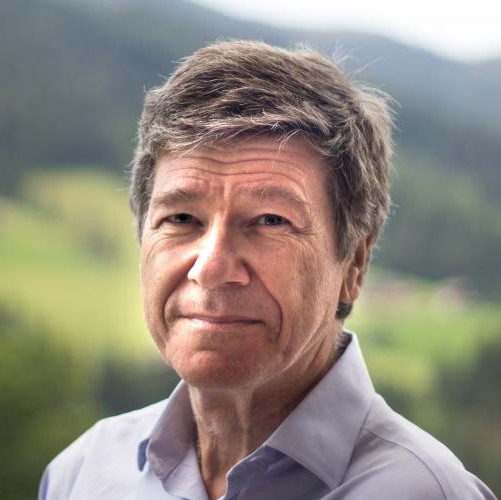
Jeffrey D. Sachs
Millennium Promise Co-founder
Director of the Earth Institute at Columbia University
Ray Chambers
Millennium Promise Co-founder
United Nations Secretary-General's Special Envoy for Malaria
In 2005, Jeffrey D. Sachs, director of the Earth Institute at Columbia University and Special Advisor to the UN Secretary-General on the MDGs, teamed up with Ray Chambers, one of the visionary pioneers of private-equity investing and a passionate philanthropist, to establish Millennium Promise.
The Millennium Promise Alliance would be the first international non-governmental organization solely committed to supporting the achievement of the MDGs, with a specific mandate to translate the world’s commitment to the MDGs through the mobilization of tangible results.
The co-founders and Board of Directors set forth to assemble a robust global network of key partners and industry leaders to support the new organization and its flagship initiative, the Millennium Villages Project.
As a founding partner, the Earth Institute would bring world-class scientific expertise in almost every field related to the Project’s work. The UNDP, as the Project’s implementing partner would also be key to ensuring the Project’s success. Perhaps most importantly, the host countries, local governments and civil society organizations in the communities and countries where the Project would ultimately work, would own the Millennium Villages effort and oversee the day to day operations of bringing about its objectives.
Landmark early support from The Soros Fund helped to draw further investments by a passionate group of committed individuals, companies, foundations, and governments.
Technical and in-kind investments followed, including hundreds of thousands of insecticide treated mosquito nets from Sumitomo Chemical, hundreds of miles of piping from JM Eagle to bring safe water to communities, tons of fertilizer from Agrium and Mosaic, and essential drugs from Novartis, among many others. Today hundreds of supporters contribute to our work through financial, technical, and other support.
Together, this global alliance of partners makes our work possible by directly empowering communities to reach new frontiers of opportunity, laying the foundation for ongoing innovations and local entrepreneurship.
Launched in 2006, the Millennium Villages Project (MVP) is where we put our ideas into action. Offering an innovative integrated approach to rural development, the MVP simultaneously addresses the challenges of extreme poverty in many inter-connected areas: agriculture, education, health, infrastructure, gender equality and business development.
We know that in order to effect lasting change in any one sphere, we must improve them all. Learn More
A CHW checks up on 7-month-old Baby Abina
during a home visit in Bonsaaso (Ghana).
One goal of the Project is to create lasting “open source” tools, systems, and models that can be used by communities anywhere, serving as an incubator for innovative solutions to development challenges. Innovations in healthcare delivery systems (community health workers), information technology (ChildCount+), off-grid energy (SharedSolar), and more are the hallmark of the MVP.
Working in close partnerships with host countries and communities, the Project demonstrates how the MDGs are achievable through practical, low-cost interventions, highlighting the value and feasibility of integrated, community-based investments.
Currently reaching more than 500,000 people in village clusters across 10 countries in sub-Saharan Africa, the MVP is the flagship initiative of Millennium Promise with its close partner the Earth Institute, Columbia University.
Holistic, community-led strategies are more effective than stand-alone programs. The Millennium Villages Project … has shown that synergistic investments in agriculture, health, education, infrastructure, business development, and environmental conservation can lead to rapid and considerable progress in food security, school attendance and performance, reduced hunger and improved livelihoods in a short period of time.
In 2005, at both the G8 Summit in Gleneagles and at the UN World Summit in New York, world leaders made major commitments to increase official development assistance (ODA) for basic investments in the poorest countries, particularly in sub-Saharan Africa. They pledged to make available approximately $90 per African by 2010 en route to much further increases by 2015. These financial commitments underpinned a major policy breakthrough stating that every developing country would be supported to implement a national strategy ambitious enough to achieve the MDG.
The package of MVP interventions was then designed to operate well within the budget envelope agreed to by world leaders in 2005. The Project was launched in 2006 at a budget of only $120 per capita per year, with MVP donors contributing half of the cost ($60) and the other half being covered by local governments, partners, and communities.
Using effective, low-cost interventions, the MVP shows that the MDGs can be achieved on a rapid timeline for less money than world leaders have already promised to spend in ODA.
Teaching a village to fish not only feeds entire families, but also leads to profound improvements in the standard of living.
Fishing has really helped me. I sell fish, and from my profits I was able to buy cows and get milk. I also save some of the money and use it for school fees for my child, and clothe my child. I can also buy household items like sugar, flour, meat, paraffin, and cooking fat.